Settings and search
Radio stories
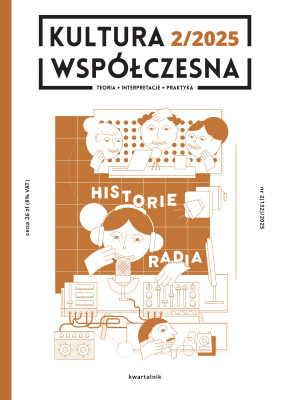
Table of contents
Radio stories
doi.org/10.26112/kw.2025.132.01
doi.org/10.26112/kw.2025.132.02
This article explores the influence of the Marconi Wireless Telegraph Company on the establishment of Polish Radio in 1925 and the development of broadcasting infrastructure in interwar Poland. It examines critical moments in this process, including debates over the future structure of Polish broadcasting, the competition between the Polish Radiotechnical Society (in Polish: Polskie Towarzystwo Radiotechniczne) and Polish Radio for the broadcasting concession, and the eventual creation of the Polish Marconi Works (in Polish: Polskie Zakłady Marconi). The analysis situates these developments in a broader economic and political context, emphasising the role of both Polish and British perspectives in shaping the collaboration between Marconi Wireless Telegraph and Polish Radio. Rather than viewing broadcasting solely as a national project, the article frames this cooperation as part of a cartel capitalism model, wherein transnational corporate alliances played a key role in media development. This approach challenges the traditional narrative of public radio as a purely domestic initiative and shows how international capital, patent ownership and state interests converged in the formative years of Polish broadcasting.
Key words: cartel capitalism, Polish Radio, Marconi Wireless Telegraph, broadcasting, radio technology
Bibliography
Cronqvist, Marie, Christoph Hilgert. „Entangled media histories: The value of transnational and transmedial approaches in media historiography”. Media History 23, 1 (2017).
Föllmer, Golo, Alec Badenoch, red., Transnationalizing Radio Research: New Approaches to an Old Medium. Bielefeld: Transcript, 2018.
Hilmes, Michele. „Entangled media histories: a response”. Media History 23, 1 (2017).
Kwiatkowski, Maciej J. Narodziny Polskiego Radia. Warszawa: Państwowe Wydawnictwo Naukowe, 1972.
Lommers, Suzanne. Europe – On Air: Interwar Projects for Radio Broadcasting. Amsterdam: Amsterdam University Press, 2012.
Miazek, Ryszard. Przeminęło z radiem. Opowieść o Zygmuncie Chamcu – założycielu i pierwszym dyrektorze Polskiego Radia. Rzeszów: Wyższa Szkoła Informatyki i Zarządzania, Polskie Radio, 2005.
Miszczak, Stanisław. Historia radiofonii i telewizji w Polsce. Warszawa: Wydawnictwo Komunikacji i Łączności, 1972.
Potter, Simon J. This is the BBC: Entertaining the Nation, Speaking for Britain? 1922–2022. Oxford: Oxford University Press, 2022.
Raboy, Marc. Marconi. The Man who Networked the World. New York: Oxford University Press, 2016.
doi.org/10.26112/kw.2025.132.03
Tłum. Joanna Walewska-Choptiany
To protect listeners from foreign ideologies or compete with enemy radio stations in the aether – this persistent dilemma shaped the history of Cold War broadcasting in the Soviet sphere of influence. Focusing on the intersection of technology, politics and geography, this paper examines the key factors that influenced decisions to invest in jamming foreign broadcasts versus expanding international broadcasting facilities. Shortwave technology played an important role in shaping both the fantasy of a globally resonant propaganda apparatus and the practical implementation of jamming strategies – flooding Western frequencies with meaningless noise. However, communist authorities feared that pursuing both aims simultaneously was unfeasible due to financial, technological and geographical constraints. Against this backdrop, the text explores the frequently overlooked technical limitations and aspirational visions related to cross-border radio transmission. Challenging the conventional boundaries of Cold War historiography, this study is primarily based on site-specific research conducted at an abandoned Bulgarian transmission centre once used for both jamming and international broadcasting, in coordination with the Soviet Union.
Key words: Cold War broadcasting, jamming, propaganda, media archaeology, history of technology
Bibliography
Applebaum, Anne. Koncern autokracja. Dyktatorzy, którzy chcą rządzić światem. Tłum. Michał Rogalski. Warszawa: Wydawnictwo Agora, 2024.
Badenoch, Alexander, Andreas Fickers, Christian Henrich-Franke, red., Airy Curtains in the European Ether: Broadcasting and the Cold War. Baden-Baden: Nomos, 2013.
Beck, John, Ryan Bishop, red., Cold War Legacies: Systems, Theory, Aesthetics. Edinburgh: Edinburgh University Press, 2022.
Berg, Jerome S. Broadcasting on the Short Waves, 1945 to Today. Jefferson NC: McFarland & Co, 2008.
Biagioli, Mario, red., The Science Studies Reader. New York: Routledge, 1999.
Foucault, Michel. Archeologia wiedzy. Tłum. Andrzej Siemek. Warszawa: Państwowy Instytut Wydawniczy, 1977.
Gooding, David, Trevor Pinch, Simon Schaffer, red., The Uses of Experiment: Studies in the Natural Sciences. Cambridge: Cambridge University Press, 1999.
Johnson, A. Ross, R. Eugene Parta, red., Cold War Broadcasting: Impact on the Soviet Union and Eastern Europe: A Collection of Studies and Documents. Budapest, New York: CEU Press, 2010.
Kind-Kovács, Friederike. „Voices, letters, and literature through the Iron Curtain: Exiles and the (trans)mission of radio in the Cold War”. Cold War History 13, 2 (2013).
Lovell, Stephen. Russia in the Microphone Age: A History of Soviet Radio, 1919–1970. Oxford: Oxford University Press, 2015.
Mikkonen, Simo. „Stealing the monopoly of knowledge? Soviet reactions to U.S. Cold War broadcasting”. Kritika: Explorations in Russian and Eurasian History 11, 4 (2010).
Pleikys, Rimantas. Jamming. Wilno: R. Pleikys, 1998.
Révész, Béla. Manipulációs technikák a hidegháború korai időszakában. Szeged: JATE Acta Juridica et Politica, 1996.
Roth-Ey, Kristin. „Listening out, listening for, listening in: Cold War radio broadcasting and the late Soviet audience”. The Russian Review 79, 4 (2020).
Shapin, Steven, Simon Schaffer. Leviathan and the Air-Pump: Hobbes, Boyle, and the Experimental Life. Princenton, New Jersey: Princeton University Press, 1985.
Snyder, Timothy. Droga do niewolności. Rosja, Europa, Ameryka. Tłum. Bartłomiej Pietrzyk. Kraków: Znak, 2022.
Thompson, Emily A. The Soundscape of Modernity: Architectural Acoustics and the Culture of Listening in America, 1900–1933. Cambridge MA: The MIT Press, 2002.
doi.org/10.26112/kw.2025.132.04
Underground broadcasting in Poland during the 1980s represented a unique phenomenon, both technologically and in terms of its outreach. Operating as a network of independent initiatives, it fits within the category of radical media that presented a vision of reality distinct from the dominant narrative. This article examines selected broadcasting initiatives of the Solidarity underground movement through the conceptual lens of local micro-ecologies. A key dynamic in the latter was co-evolution understood not only as the process of developing new broadcasting apparatuses but also as a form of technological maturation on the part of their creators and users. A central characteristic of these broadcasting apparatuses was their endemic nature. Endemic media refer to non-standardised, place- and time-specific media practices that resist replication outside their original contexts. The ecological diversity of these practices arose from a confluence of political, technological, financial and constructional factors. The apparatuses themselves were predominantly amateur constructions – creative modifications rooted in practices of tinkering rather than following the protocols of industrial manufacture. As such, they represent an instantiation of vernacular culture, conceived here as a culturally embedded response conditioned by, and emerging in opposition to, the dominant system.
Key words: underground radio, endemic media, tinkering, media ecology, vernacular culture
Bibliography
Downing, John. Radical Media: Rebellious Communication and Social Movements. London: SAGE Publications, 2001.
Dytman-Stasieńko, Agnieszka. Cyfrowy świt wolności. Technologie medialnego oporu w Polsce w latach osiemdziesiątych XX wieku. Warszawa: Wydawnictwo Naukowe Scholar, 2024.
Hanasz, Jan. „Radio «balonowe» toruńskiej Solidarności”. W: Radio Solidarność: podziemne rozgłośnie oraz audycje radiowe i telewizyjne w Polsce 1982–1990. Materiały z konferencji w Wyższej Szkole Zawodowej „Kadry dla Europy” w dniach 26–27 maja 2007 roku, red. Bogdan Bakuła, Anna Konopka. Poznań: Wyższa Szkoła Zawodowa „Kadry dla Europy”, 2008.
Jacob, Francois. „Evolution and tinkering”. Science 196, 4295 (1977).
Lazarowicz, Romuald. „Radio Solidarności Walczącej”. W: Radio Solidarność: podziemne rozgłośnie oraz audycje radiowe i telewizyjne w Polsce 1982–1990. Materiały z konferencji w Wyższej Szkole Zawodowej „Kadry dla Europy” w dniach 26–27 maja 2007 roku, red. Bogdan Bakuła, Anna Konopka. Poznań: Wyższa Szkoła Zawodowa „Kadry dla Europy”, 2008.
Lévi-Strauss, Claude. Myśl nieoswojona. Tłum. Andrzej Zajączkowski. Warszawa: Państwowe Wydawnictwo Naukowe, 1969.
Ligarski, Sebastian, Grzegorz Majchrzak. Wojna o eter. Media elektroniczne od solidarnościowego karnawału do początków rządów solidarnościowych. Warszawa: Narodowe Centrum Kultury, 2016.
Majchrzak, Grzegorz. „Radio «Solidarność». Niezależna działalność radiowa pod szyldem «Solidarności» 1980–1989”. W: NSZZ „Solidarność” 1980–1989. T. 2: Ruch społeczny. Red. Łukasz Kamiński, Grzegorz Waligóra. Warszawa: Instytut Pamięci Narodowej, 2010.
Napiórkowski, Marcin, Artur Szarecki, Paweł Dobrosielski, Piotr Filipkowski, Olga Kaczmarek. „Kultura wernakularna. Antropologia projektów nieudanych”. Kultura Współczesna 87, 3 (2015).
Nardi, Bonnie A., Vicki O’Day. Information Ecologies: Using Technology with Heart. Cambridge MA: The MIT Press, 2000.
Radziejowski, Janusz. „Ludzie i technika. Z historii warszawskiego Radia Solidarność”. W: Radio Solidarność: podziemne rozgłośnie oraz audycje radiowe i telewizyjne w Polsce 1982–1990. Materiały z konferencji w Wyższej Szkole Zawodowej „Kadry dla Europy” w dniach 26–27 maja 2007 roku, red. Bogdan Bakuła, Anna Konopka. Poznań: Wyższa Szkoła Zawodowa „Kadry dla Europy”, 2008.
Rudka, Szczepan. „Niezależna działalność radiowa we Wrocławiu w latach 1981–1989”. W: Radio Solidarność: podziemne rozgłośnie oraz audycje radiowe i telewizyjne w Polsce 1982–1990. Materiały z konferencji w Wyższej Szkole Zawodowej „Kadry dla Europy” w dniach 26–27 maja 2007 roku, red. Bogdan Bakuła, Anna Konopka. Poznań: Wyższa Szkoła Zawodowa „Kadry dla Europy”, 2008.
Rusiecki, Aleksander. „Radio InterNowa”. W: Radio Solidarność: podziemne rozgłośnie oraz audycje radiowe i telewizyjne w Polsce 1982–1990. Materiały z konferencji w Wyższej Szkole Zawodowej „Kadry dla Europy” w dniach 26–27 maja 2007 roku, red. Bogdan Bakuła, Anna Konopka. Poznań: Wyższa Szkoła Zawodowa „Kadry dla Europy”, 2008.
Turło, Zygmunt. „Toruńskie Radio Solidarność. Konstrukcja”. W: Radio Solidarność: podziemne rozgłośnie oraz audycje radiowe i telewizyjne w Polsce 1982–1990. Materiały z konferencji w Wyższej Szkole Zawodowej „Kadry dla Europy” w dniach 26–27 maja 2007 roku, red. Bogdan Bakuła, Anna Konopka. Poznań: Wyższa Szkoła Zawodowa „Kadry dla Europy”, 2008.
Wanke-Jakubowska, Małgorzata, Maria Wanke-Jerie. Solidarność w eterze. Rzecz o wrocławskich radiowcach. Wrocław: Profil, 2017.
doi.org/10.26112/kw.2025.132.05
This article examines the history and significance of pirate radio, particularly Radio Caroline, for the development of popular music in the second half of the 1960s. Pirate radio stations, broadcasting from ships, represented a form of resistance to the state monopoly on radio. They enabled the dissemination of alternative music content and independent programming that stood in contrast to the officially sanctioned offerings of public broadcasters. As one of the most influential of these stations, Radio Caroline gained widespread popularity by providing listeners with an alternative to the BBC’s rigid and conservative broadcasting style. With greater flexibility in music selection and a freer, more informal approach to presentation, pirate radio played a pivotal role in the social and cultural revolution of the 1960s, significantly shaping youth counterculture. The article also addresses the broader influence of pirate radio on contemporary media, drawing parallels with modern independent broadcasting initiatives. It emphasises the enduring importance of independence and creativity in radio. By compiling and analysing a variety of sources, the study offers a comprehensive understanding of the dynamics and evolution of pirate radio in a historical and cultural framework. Furthermore, the article highlights pirate radio’s role in promoting music that resonated with younger audiences, while also examining the legal and ethical challenges these stations faced. Despite ongoing efforts to restrict their operation, pirate radio stations managed to retain a degree of autonomy, which proved crucial to the development of freedom of expression and media pluralism during a time of significant social transformation.
Key words: pirate radio, Radio Caroline, counterculture, popular music, British invasion
Bibliography
Badenoch, Alexander. „Between rock and roll and a hard place: ‘Pirate’ radio and the problems of territory in Cold War Europe”. W: Airy Curtains in the European Ether. Broadcasting and the Cold War, red. Alexander Badenoch, Andreas Fickers, Christian Henrich-Franke. Baden-Baden: Nomos, 2013.
Budrewicz, Leszek, Szymon Nożyński. „Szafa grająca w Omaha, czyli kilka słów o formatowaniu radia”. Glissando. Magazyn o muzyce nowoczesnej 35 (2018).
Chapman, Robert. Selling The Sixties. The Pirates and Pop Music Radio. London, New York: Routledge, 1992.
Clark, Ray. Radio Caroline. The True Story of the Boat That Rocked. Cheltenham: The History Press, 2014.
Cummings, Alex S. Democracy of Sound. Music Piracy and the Remaking of American Copyright in the Twentieth Century. New York: Oxford University Press, 2013.
Doliwa, Urszula. Piraci w eterze. Proces powstawania prywatnej radiofonii lokalnej w Polsce w latach 1989–1995. Olsztyn: Wydawnictwo UWM, 2023.
Jawłowska, Aldona. Drogi kontrkultury. Warszawa: Państwowy Instytut Wydawniczy, 1975.
Jędrzejewski, Stanisław. Radio publiczne w Europie. Program, finansowanie, technologia, audytorium. Warszawa: Wydawnictwo Poltext, 2015.
Jones, Steve. Making Waves: Pirate Radio and Popular Music. Washington DC: ERIC Clearinghouse, 1988.
Kleinsteuber, Hans J. „Radio w Europie”. W: Radio i społeczeństwo, red. Grażyna Stachyra, Elżbieta Pawlak-Hejno. Lublin: Wydawnictwo UMCS, 2011.
Mason, Matt. The Pirate’s Dilemma. How Youth Culture is Reinventing Capitalism. New York: Free Press, 2008.
Miley, Frances M., Andrew F. Reed. „Financial control, blame avoidance and Radio Caroline: Talkin’ ‘bout My Generation”. Accounting History 22, 3 (2017).
Rychlewski, Marcin. „Rock – kontrkultura – establishment”. W: Kontrkultura. Co nam zostało z tamtych lat?, red. Wojciech Burszta, Mariusz Czubaj, Marcin Rychlewski. Warszawa: Wydawnictwo SWPS Academica, 2005.
Yoder, Andrew R. Pirate Radio Stations. Tuning in to Underground Broadcasts. New York: Tab Books, 1990.
doi.org/10.26112/kw.2025.132.06
This article attempts to define and characterise the radio series Tropami ludzi i pieśni (‘Following the trail of people and songs’), dedicated to Polish folk culture. The series was produced between 1960 and 1981 for nationwide broadcast by Maryna Okęcka-Bromkowa and Bohdan Bromek – folklorists and journalists associated with the Regional Broadcasting Station of Polish Radio – Radio Olsztyn. It constitutes the largest collection of its kind in the Polish Radio Archives and earned the authors the prestigious Golden Microphone Award of the Polish Radio. The series comprises 109 one-hour episodes and represents a curated collection of intangible folk culture during the era of the People’s Republic of Poland. Its enduring relevance gives it a timeless character. This initiative can be situated within the broader trend of organised and institutionalised efforts to preserve cultural memory through radio, which in this context becomes a form of lieu de mémoire (site of memory). The author analyses broadcasts preserved in the archives of Radio Olsztyn and the Polish Radio in Warsaw, as well as archival materials from Maryna Okęcka-Bromkowa housed in the Museum of Warmia and Masuria.
Key words: radio, broadcast, folk culture, cultural memory, ethnography
Bibliography
Archiwum Muzeum Warmii i Mazur w Olsztynie.
Archiwum Polskiego Radia.
Archiwum Regionalnej Rozgłośni Polskiego Radia.
Baliszewska, Maria. „Zbiory kultury ludowej w Radiowym Centrum Kultury Ludowej – Polskie Radio Warszawa”. Twórczość Ludowa 19, 3–4 (1999).
Burszta, Józef. „Folklor, folklorystyka, folkloryzacja”. Teatr Ludowy 1–2 (1966).
Chłosta, Jan. Warmiak z Podhala. Olsztyn: Wers, 2006.
Edensor, Tim. Twórczość narodowa, kultura popularna i życie codzienne. Tłum. Agata Sadza. Kraków: Wydawnictwo UJ, 2004.
Kończal, Kornelia. „Bliskie spotkania z historią drugiego stopnia”. W: Pamięć zbiorowa jako czynnik integracji i źródło konfliktów, red. Andrzej Szpociński. Warszawa: Wydawnictwo Naukowe Scholar, 2009.
Kropacz-Szydłowska, Magdalena. Od Ekspozytury Polskiego Radia do Radia Olsztyn SA. Z dziejów olsztyńskiej radiofonii w latach 1952–1993. Olsztyn: Polskie Towarzystwo Historyczne Oddział w Olsztynie, Instytut Dziennikarstwa i Komunikacji Społecznej UWM w Olsztynie, 2012.
Lewandowska, Izabela. Trudne dziedzictwo ziemi. Warmia i Mazury 1945–1989. Olsztyn: Wydawnictwo UWM, 2012.
Okęcka-Bromkowa, Maryna. „Każdy wyjazd to nowa przyjaźń”. Radio i Telewizja 9 (1969).
Sierocki, Radosław, Rafał Kleśta-Nawrocki, Jarosław Kowalewski. Praktykowania pamięci. Olsztynianie – rekonesans antropologiczny. Olsztyn: Polskie Towarzystwo Historyczne Odział w Olsztynie, Instytut Historii i Stosunków Międzynarodowych UWM, 2014.
Szydłowska, Joanna. Narracje pojałtańskiego Okcydentu. Literatura polska wobec pogranicza na przykładzie Warmii i Mazur (1945–1989). Olsztyn: Wydawnictwo UWM, 2013.
Szydłowska, Magdalena. „Codzienność zapisana i zapamiętana. Tropami poetki, dziennikarki i pisarki Maryny Okęckiej-Bromkowej”. W: Radio w cyfrowym świecie. Regionalne rozgłośnie radiowe, red. Michał Łyszczarz, Marek Sokołowski. Olsztyn: Wydawnictwo UWM, 2016.
Zajas, Krzysztof. „Kresy skreślone, czyli o polskiej wielokulturowości”. Wielogłos. Pismo Wydziału Polonistyki Uniwersytetu Jagiellońskiego 5–6 (2009).
doi.org/10.26112/kw.2025.132.07
Prison-related radio projects are emerging across the globe. These initiatives serve multiple important functions, including supporting social rehabilitation, mitigating the effects of prison isolation, giving voice to marginalised individuals and providing effective educational tools. The Prison Radio International Global Survey is an initiative aimed at building a global database of prison radio projects. Conducted by Prison Radio International in partnership with Justice Matters, the survey has been distributed to prison radio practitioners in various countries. As of May 2024, responses had been received from representatives of 43 prison radio projects across 17 countries. This article analyses the survey results, focusing on key achievements identified by the creators of prison radio initiatives, divided into eleven categories: expanding outreach, successful partnerships, social inclusion and amplification of marginalised voices, positive feedback, educational impact, social integration and inmate engagement, innovative content, rehabilitation and personal development, raising awareness about the penitentiary system and prison conditions, distinctions and awards, and the establishment and operation of prison radio stations. The analysis is further enriched by examples of such achievements from various sources, including online publications, articles, and interviews with prison radio creators.
Key words: radio, prison media, non-commercial media, social media, community media
Bibliography
Anderson, Heather. „Beyond the bars: Prisoners’ radio strengthening community”. Media International Australia 149, 1 (2013).
Anderson, Heather. Raising the Civil Dead: Prisoners and Community Radio. Bern: Peter Lang, 2012.
Anderson, Heather, Charlotte Bedford, Urszula Doliwa. „The evolving genre of prisoner radio: An international examination”. W: The Routledge Companion to Radio and Podcast Studies, red. Mia Lindgren, Jason Loviglio. London: Routledge, 2022.
Bedford, Charlotte. Making Waves behind Bars. Bristol: Bristol University Press, 2018.
Behan, Cormac. „No longer a ‘collateral consequence’: Imprisonment and the reframing of citizenship”. European Journal of Criminology 19, 6 (2020).
Bonini, Tiziano, Marta Perrotta. „On and off the air: radio-listening experiences in the San Vittore prison”. Media, Culture & Society 29, 2 (2007).
Doliwa, Urszula. „Radio behind bars: The Polish case”. Radio Journal: International Studies in Broadcast & Audio Media 11, 2 (2013).
Einat, Tomer, Maayan Nagar. „Radio. What’s new? Someone still loves you: The impact of listening to prison radio”. The Prison Journal 103, 5 (2023).
Gosztonyi, Gergely. „Prison radios: Communication on the periphery of a society”. Mediální studia 12, 1 (2018).
Jewkes, Yvonne. „The use of media in constructing identities in the masculine environment of men’s prisons”. European Journal of Communication 17, 2 (2002).
Kaun, Anne, Fredrik Stiernstedt. Prison Media: Incarceration and the Infrastructures of Work and Technology. Cambridge MA: The MIT Press, 2023.
Knight, Victoria, Siobhann Tighe. „Should the public be listening to prison radio programmes? An exploration of prison radio in Sweden and North America”. Prison Service Journal 234 (2017).
Maguire, Phil. „Making waves behind bars. The (past, present and) future of prison radio”. W: The Bloomsbury Handbook of Radio, red. Kathryn McDonald, Hugh Chignell. London: Bloomsbury, 2023.
McDermott, Nathalie. „The ‘word’ on education in prison: Radio Wanno”. Criminal Justice Matters 56, 1 (2004).
McDonald, Kathryn. Performance, power and production: a selective, critical and cultural history of the radio interview [praca doktorska]. Bournemouth University, 2014. https://eprints.bournemouth.ac.uk/22509/.
Radio as a medium
doi.org/10.26112/kw.2025.132.08
The aim of this article is to examine Radio Télévision Libre des Mille Collines (RTLM), a radio station that broadcast in Rwanda between 8 July 1993 and 31 July 1994. ‘The Free Radio and Television of a Thousand Hills’ played a significant role in the mobilisation for genocide. The introduction outlines the station’s organisational structure and stated objectives, followed by an overview of its origins, founders and target audience. This contextual description addresses factors such as ethnicity, party affiliation, education and the role played in Rwanda’s political landscape. The article analyses the most frequently broadcast topics, tracing the gradual radicalisation of RTLM’s messaging. Particular attention is paid to its propaganda techniques, including the construction of the enemy and the dissemination of a ‘fortress under siege’ narrative, which portrayed the Hutu as being threatened by the Tutsi population. The station’s role during the genocide itself is examined, with emphasis on its use as an informational tool – specifically, in directing Hutu militias to the locations where Tutsi were hiding. Finally, the article discusses the conviction of RTLM’s founders by the International Criminal Tribunal for Rwanda for their complicity in the genocide, their subsequent appeals and the final judgment delivered by the Appeals Chamber.
Key words: Free Radio and Television of a Thousand Hills, Rwanda, Hutu, Tutsi, genocide
Bibliography
Bar, Joanna. Po ludobójstwie. Państwo i społeczeństwo w Rwandzie 1994–2012. Kraków: Księgarnia Akademicka, 2013.
Bar, Joanna. Rwanda. Warszawa: Wydawnictwo Trio, 2013.
Chrétien, Jean-Pierre, red., Rwanda. Les medias du genocide. Paris: Karthala, 1995.
Fardon, Richard, Graham Furniss, red., African Broadcast Cultures. Radio in Transition. Oxford: James Currey, 2000.
Gulseth, Hege Løvdal. The Use of Propaganda in the Rwandan Genocide. A Study of Radio-Télévision Libre des Mille Collines (RTLM). Oslo: University of Oslo, 2004.
Hefti, Angela, Laura Ausserladscheider Jonas. „From hate speech to incitement to genocide: the role of the media in the Rwandan genocide”. Boston University International Law Journal 38, 1 (2020).
Kellow, Christine, H. Leslie Steeves. „The role of radio in the Rwandan genocide get access arrow”. Journal of Communication 48, 3 (1998).
Kirschke, Linda. Broadcasting genocide: censorship, propaganda and state-sponsored violence in Rwanda 1990–1994. London: Article 19, 1996.
Nijakowski, Lech. Rozkosz zemsty. Socjologia historyczna mobilizacji ludobójczej. Warszawa: Wydawnictwo Naukowe Scholar, 2013.
Thompson, Allan, red., The Media and the Rwanda Genocide. London: Pluto Press, Fountain Publishers, IDRC, 2007.
doi.org/10.26112/kw.2025.132.09
This article attempts to capture the current state of the Polish Radio Theatre after nearly one hundred years of its existence. The author focuses particularly on the evolving aesthetics of radio plays and the interaction and cross-pollination between theatre and radio, along with the resulting consequences for both staged performances and radio productions. Alongside a concise overview of the history of radio theatre in Poland and theoretical insights into radio drama as the most significant radio genre, the article also considers the creation of contemporary radio plays, particularly those developed outside the traditional radio medium, and their influence on the practices of the Polish Radio Theatre. A section of the article is dedicated to examining theatre within the broader media landscape, with a focus on the reciprocal influence between theatre and radio. To illustrate changes in the functioning and aesthetics of radio plays and performances, the text discusses example works, projects and initiatives, including Wieloryb: The Globe (‘The Whale: The Globe’) directed by Ewa Rysova (Łaźnia Nowa, Kraków, 2016); Strach (‘Fear’) by Małgorzata Wdowik (TR Warszawa, 2018); Andy by Krzysztof Czeczot (2013); and Oni (‘Them’) by Tadeusz Kabicz (2025).
Key words: Polish Radio Theatre, radio play, Polish contemporary theatre, Polish drama
Bibliography
Bachura, Joanna. Odsłony wyobraźni. Współczesne słuchowisko radiowe. Toruń: Wydawnictwo Adam Marszałek, 2012.
Bardijewska, Sława. Nagie słowo. Rzecz o słuchowisku. Warszawa: Dom Wydawniczy Elipsa, 2001.
Bożek, Jakub, Bartosz Nowicki. „Posłuchaj książki, czyli rzecz o polskich słuchowiskach”. Polityka, 17 maja 2016. https://www.polityka.pl/tygodnikpolityka/kultura/1661172,1,posluchaj-ksiazki-czyli-rzecz-o-polskich-sluchowiskach.read.
Duda, Artur, Marzenna Wiśniewska. „Teatr wśród mediów – wyzwania i propozycje badawcze”. W: Teatr wśród mediów, red. Artur Duda, Marzenna Wiśniewska, Bartłomiej Oleszek. Toruń: Wydawnictwo Naukowe UMK, 2015.
Dziewiątkowski, Janusz A. O teatrze. PolskieRadio.pl, 2018. https://www.polskieradio.pl/357/7138/,Oteatrze.
Kaziów, Michał. O dziele radiowym. Z zagadnień estetyki oryginalnego słuchowiska. Wrocław: Ossolineum, 1973.
Kołodziejska, Joanna. „Analiza materii fonicznej wybranych słuchowisk Andrzeja Waligórskiego”. Edukacja Muzyczna 14 (2019).
Kopciński, Jacek. „Na przekór formatowi. Kilka uwag o polskim dramacie współczesnym”. Załącznik Kulturoznawczy 7 (2020). https://zalacznik.uksw.edu.pl/sites/default/files/zalacznik_2020_33_Kopcinski.pdf.
Kopciński, Jacek. „Nowe przestrzenie subiektywności: Radiowy genotyp dramaturgii współczesnej”. Pamiętnik Teatralny 68, 2 (2019).
Mendyk, Michał. Uniwersum radiowe, czyli o nieteatralnej naturze słuchowiska. Konferencja „Nowe słuchowiska”, Instytut Teatralny w Warszawie, 20 stycznia 2017. https://encyklopediateatru.pl/studio-teatralnych-form-eksperymentalnych.
Pawlik, Aleksandra. „Aktor w teatrze radiowym”. Folia Litteraria Polonica 17, 3 (2012).
Sugiera, Małgorzata. „Nażywość”. W: Performatyka: terytoria, red. Ewa Bal, Dariusz Kosiński. Kraków: Wydawnictwo UJ, 2017.
Szymonik, Anna. „Teatr z misją. O Teatrze Polskiego Radia i Teatrze Telewizji”. Teatr 2 (2012). https://teatr-pismo.pl/4058-teatr-z-misja-o-teatrze-polskiego-radia-i-teatrze-telewizji/.
Wójciszyn-Wasil, Aneta. „Obrazy – nie tylko w wyobraźni. Wizualna ewolucja radia”. Zeszyty Naukowe KUL 1 (2018).
doi.org/10.26112/kw.2025.132.10
This article is a historical study that, through a diachronic approach, traces the transformations of traditional genres of artistic radio – radio reportage and radio play – from their inception in the interwar period to the present day. The public broadcaster has been a continuous presence on the Polish media scene for nearly a century, accompanying audiences in their everyday lives while adapting to shifts in social communication. The author situates these genre evolutions within the contemporary communicative context – particularly in light of the audiocentric turn, as defined by media researchers, which emphasises the role of hearing and sound-based cultural texts. There is a marked increase in both the production of audio works and scholarly interest in their analysis. Today, audio literature is accessible not only via radio but also beyond the institutional structures that, until the 21st century, held a near monopoly over its creation. The emergence of new distribution channels, particularly podcasts, has altered the status of these genres. The article further highlights the significance of the specific characteristics of audio as a medium in which reportages and radio plays are produced, as well as the technological advancements that shape the audio-based storytelling process – such as binaural recording techniques and omnidirectional sound systems.
Key words: audiocentric turn, radio play, reportage, history of radio artistic genres
Bibliography
Bachura-Wojtasik, Joanna. „Literatura audialna między fikcją a niefikcją. «Upowieściowienie» dokumentu a narracje fikcyjne”. W: Między sztuką a codziennością. W stronę nowej syntezy. T. 1. Red. Maryla Hopfinger, Zygmunt Ziątek, Tomasz Żukowski. Warszawa: Instytut Badań Literackich PAN, 2016.
Bachura-Wojtasik, Joanna. „Złote czasy literatury dźwiękowej non-fiction (recenzja książki: Michalak, K. [2023]. Dźwięk bez fikcji. O radiowym reportażu artystycznym. Warszawa: PWN, ss. 232)”. Perspektywy Kultury 46, 3 (2024).
Bachura-Wojtasik, Joanna, Kinga Sygizman. „Dokument(alność) a kreacyjność artystycznych audycji radiowych autorstwa Katarzyny Michalak i Marty Rebzdy”. W: Metody badania komunikacji i mediów. Perspektywa teoretyczna i analityczna, red. Anna Barańska-Szmitko. Łódź: Wydawnictwo UŁ, 2021.
Bachura-Wojtasik, Joanna, Kinga Sygizman. „Technika analizy i sposób opisu artystycznych gatunków radiowych”. W: Metody badania komunikacji i mediów. Perspektywa teoretyczna i analityczna, red. Anna Barańska-Szmitko. Łódź: Wydawnictwo UŁ, 2021.
Hopfinger, Maryla. Literatura i media. Po 1989 roku. Warszawa: Oficyna Naukowa, 2010.
Hopfinger, Maryla. „Między sztuką a codziennością. Literackość bez fikcji?”. W: Między sztuką a codziennością. W stronę nowej syntezy. T. 1. Red. Maryla Hopfinger, Zygmunt Ziątek, Tomasz Żukowski. Warszawa: Instytut Badań Literackich PAN, 2016.
Jankowska, Janina. „Sztuka reportażu radiowego”. W: 70 lat Polskiego Radia, red. Barbara Górak-Czerska, Stanisław Jędrzejewski. Warszawa: Wydawnictwo Tenten, 1995.
Klawiter, Andrzej, Anna Preis. „Słyszeć człapiącego grubasa. O tym, jak posługujemy się słuchem w życiu codziennym”. W: Ekspektatywa_1, Słuchawy. Projektowanie dla ucha, red. Katarzyna Krakowiak, Andrzej Kłosak, Jacek Staniszewski. Warszawa: Fundacja Bęc
Zmiana, 2009.
Klimczak, Kinga. Reportaże radiowe o krzywdzie i cierpieniu. Łódź: Wydawnictwo Primum Verbum, 2011.
Losiak, Robert. „Wokół idei ekologii akustycznej. Koncepcje i praktyki”. Studia Etnologiczne i Antropologiczne 17 (2017).
Łastowiecki, Janusz. Specyfika odbioru słuchowiska radiowego na przykładzie polskich realizacji gatunku. Toruń: Wydawnictwo Adam Marszałek, 2019.
Michalak, Katarzyna. Dźwięk bez fikcji. O radiowym reportażu artystycznym. Warszawa: Wydawnictwo Naukowe PWN, 2023.
Misiak, Tomasz. Sztuka z widokiem na ucho. Poznań: Wydawnictwo Uniwersytetu Artystycznego im. Magdaleny Abakanowicz w Poznaniu, 2021.
Pleszkun-Olejniczakowa, Elżbieta. Muzy rzadko się do radia przyznają. Szkice o słuchowiskach i reportażach radiowych. Łódź: Wydawnictwo Primum Verbum, 2012.
Stachyra, Grażyna. „Perspektywy badania współczesnej genologii radiowej”. Acta Universitatis Lodziensis. Folia Litteraria Polonica 39, 1 (2017).
Stachyra, Grażyna. „Podcasting w perspektywie specyfiki produkcji radiowej”. Media – Kultura – Komunikacja Społeczna 12, 4 (2016).
doi.org/10.26112/kw.2025.132.11
This article analyses the evolution of Internet radio and its impact on the changing consumer behaviour of listeners. Within the broader context of media technological transformation, the author highlights how radio has evolved from a tool of mass communication into a more individualised and interactive medium, now widely recognised as Internet radio. These changes – driven by media convergence and advances in digital technology – have enabled radio to attain global reach, become available on demand and allow greater interaction with users. The article also explores the theoretical framework of the ‘cooling’ of radio, referring to the phenomenon of diminished listener engagement due to the integration of radio with the Internet. This is examined through the lens of Marshall McLuhan’s theory of ‘media thermodynamics’. The analysis demonstrates that the transformation of Internet radio has significantly influenced the consumption of audio content, rendering it more personalised and better aligned with the specific needs of individual users. Furthermore, the article discusses the role of artificial intelligence in innovating content creation and enhancing the personalisation of user experiences.
Key words: Internet radio, cold and hot media, media convergence, user experience
Bibliography
Berry, Richard. „The future of radio is the internet, not on the internet”. W: Radio: The Resilient Medium. Papers from the third conference of the ECREA Radio Research Section, red. Magdalena Oliveira, Grażyna Stachyra, Guy Starkey. Sutherland: Centre for Research in Media and Cultural Studies, 2014.
Bolter, Jay D., Richard Grusin. Remediation. Understanding New Media. Cambridge MA: The MIT Press, 1999.
Federman, Mark, Derrick de Kerckhove. McLuhan for Managers: New Tools for New Thinking. Toronto: Viking Canada, 2003.
Islas, Octavio. „McLuhan y la radio. Del fonógrafo y la radiotelegrafía a Spotify”. ComHumanitas: Revista Científica de Comunicación 6, 1 (2015).
Kołodziejczyk, Wojciech, Paweł Stępka. „Radio internetowe – szanse i wyzwania”. Studia Medioznawcze 25, 2 (2016).
Kubaczewska, Wiesława, Marcin Hermanowski. Radio. Historia i współczesność. Poznań: Ars Nova, 2008.
Kuyucu, Mihalis. „Internet radio broadcasting: History differences and advantages in media industry”. W: Social Science I, red. Cahit Aslan, Özlem Aydoğmuş Ördem. Ankara: Akademisyen, 2019.
McLuhan, Marshall. Zrozumieć media. Przedłużenia człowieka. Tłum. Natalia Szczucka. Warszawa: Wydawnictwa Naukowo-Techniczne, 2004.
McQuown, Dave. „Theories of media: Glossary keywords: Radio”. The University of Chicago. https://csmt.uchicago.edu/glossary2004/radio.htm.
Nożyński, Szymon. „Radio internetowe – umiejętność słuchania, możliwość kreowania”. W: Język @ multimedia: dialog – konflikt, red. Agnieszka Dytman-Stasieńko, Jan Stasieńko. Wrocław: Wydawnictwo Naukowe DSW, 2012.
Skrzypczak, Jędrzej. „Problem koncesji na nadawanie programu nadawców internetowych”. Studia Medioznawcze 26, 3 (2006).
doi.org/10.26112/kw.2025.132.12
This article examines the role of radio as an artistic medium in telematic art, focusing on its function in generating the experience of presence across distance. Radio, as one of the earliest wireless communication technologies, played a pioneering role in overcoming spatial and temporal boundaries, laying the groundwork for subsequent developments in telecommunications. Its historical significance is highlighted, from early experiments in sound transmission to the rise of radio broadcasting and the development of the concept of liveness, which shapes the perception of shared presence between broadcaster and audience. The article explores various strategies for incorporating radio into telematic art, including the use of audio tunnels to link remote locations, the creation of shared sonic environments, distributed influence through mass broadcasting, as well as practices of jamming and remote interactive control. Radio emerges not only as a medium of transmission but also as a conceptual tool in contemporary network systems, redefining the relationship between sender and recipient in art that transcends physical distance.
Key words: telematic art, telepresence, radio art, telemetry, pirate radio
Bibliography
Aitken, Hugh G.J. The Continuous Wave: Technology and American Radio, 1900–1932. Princeton: Princeton University Press, 1985.
Ascott, Roy. Telematic Embrace: Visionary Theories of Art, Technology, and Consciousness. Berkeley: University of California Press, 2003.
Berg, Jerome S. The Early Shortwave Stations: A Broadcasting History Through 1945. Jefferson NC: McFarland & Company, 2011.
Blackman, Lisa. Immaterial Bodies: Affect, Embodiment, Mediation. London: SAGE Publications, 2012.
Depraz, Natalie. „The lived experience of being fragile: On becoming more ‘living’ during the pandemic”. Constructivist Foundations 16, 3 (2021).
Dery, Mark. „Culture jamming: Hacking, slashing, and sniping in the empire of signs”. W: Mark Dery. The Pyrotechnic Insanitarium: American Culture on the Brink. New York: Grove Press, 1999.
Fisher, Mark. Ghosts of My Life: Writings on Depression, Hauntology and Lost Futures. Winchester: Zero Books, 2014.
Gerhardt, H. Carl, Franz Huber. Acoustic Communication in Insects and Anurans: Common Problems and Diverse Solutions. Chicago: University of Chicago Press, 2002.
Heinlein, Robert A. „Waldo”. W: Robert A. Heinlein. Waldo and Magic, Inc. New York: Doubleday, 1950.
Helliwell, Robert A. Whistlers and Related Ionospheric Phenomena. Stanford: Stanford University Press, 1965.
Kac, Eduardo. Telepresence & Bio Art: Networking Humans, Rabbits, & Robots. Ann Arbor: The University of Michigan Press, 2005.
McLuhan, Marshall. Zrozumieć media. Przedłużenia człowieka. Tłum. Natalia Szczucka. Warszawa: Wydawnictwa Naukowo-Techniczne, 2004.
National Research Council. Physics of Sound in the Sea. Washington DC: National Research Council, 1949.
Read, Oliver, Walter L. Welch. From Tin Foil to Stereo: Evolution of the Phonograph. Indianapolis: Howard W. Sams & Co., 1976.
Schafer, R. Murray. The Soundscape: Our Sonic Environment and the Tuning of the World. Rochester VT: Destiny Books, 1994.
Zielinski, Siegfried. Archeologia mediów. Tłum. Krystyna Krzemieniowa. Warszawa: Oficyna Mediów, 2010.
Varia
doi.org/10.26112/kw.2025.132.13
This article explores the phenomenon of second-hand fashion (SHF), which, while rooted in individual choice, has also become a prominent cultural trend. The aim is to examine second-hand clothing as a practice associated with the principles of sustainable development and investigate the motivations of SHF consumers. As demonstrated by an analysis of both theoretical and empirical material, this trend is shaped by a range of factors, including economic considerations and strategies of clever consumption. Key motivations include the high quality and uniqueness of garments, their association with well-known brands and a desire for personal distinction. Another important driver is the sheer pleasure derived from discovering unique items at low prices. This behaviour is increasingly recognised by online platforms dedicated to clothing redistribution, organisers of garage sales and swap events, as well as major fashion retailers. Thus, second-hand clothing is no longer purchased solely out of financial necessity. While SHF’s alignment with sustainable development and reduced consumption is not yet the primary motivation for most consumers, this perspective is gradually gaining traction within public consciousness.
Key words: second-hand fashion (SHF), fashion, quantitative research, sustainable development, collaborative consumption
Bibliography
Barber, Aja. Consumed. The Need for Collective Change: Colonialism, Climate Change, and Consumerism. New York, Boston: Grand Central Publishing, 2021.
Bardhi, Fleura, Eric Arnould. „Thrift shopping: Combining utilitarian thrift and hedonic treat benefits”. Journal of Consumer Behaviour 4, 4 (2005).
Bylok, Felicjan. „Meandry konsumpcji we współczesnym społeczeństwie: konsumpcjonizm versus dekonsumpcja”. Annales. Etyka w Życiu Gospodarczym 19, 1 (2016).
Crewe, Louise, Nicky Gregson. Second-Hand Cultures. New York: Berg, 2003.
GlobalData. „ThredUp Resale Raport 2024”. Marzec 2024. https://cf-assets-tup.thredup.com/resale_report/2024/ThredUp_2024_Resale%20Report.pdf.
Hajdas, Monika. „Społeczeństwo postkonsumpcyjne – kluczowe tendencje i ich wpływ na działanie przedsiębiorstwa”. Handel Wewnętrzny 9–10 (2012).
Palmer, Alexandra. „Vintage whores and vintage virgins: second hand fashion in the twenty-first century”. W: Old Clothes, New Looks. Second Hand Fashion, red. Alexandra Palmer, Hazel Clark. Oxford, New York: Berg, 2005.
Roux, Dominique, Denis Guiot. „Measuring second-hand shopping motives, antecedents and consequences”. Recherche et Applications en Marketing 23, 4 (2008).
Ul Hasan, H.M. Rakib, Chunmin Lang, Sibei Xia. „Investigating consumer values of secondhand fashion consumption in the mass market vs. luxury market. A text-mining approach”. Sustainability 15, 1 (2023).
Vinted. Climate Impact Report Summary, 2023. https://press-center-static.vinted.com/Climate_Impact_Report_Summary_EN_2023_89b136c376.pdf.
Vinted. Making second-hand first choice. Our Impact Raport, 2023. https://press-center-static. vinted.com/Impact_Report_EN_2023_d4e3d4399e.pdf.
doi.org/10.26112/kw.2025.132.14
This article explores both contemporary and historical understandings of medium. While much has already been written about values and ideas, the media themselves have often been neglected in scholarly debate. The author aims to reflect on the evolving essence and form of media – taking into account their past and present meanings – and anticipate their future roles. The discussion draws upon both classical and functional definitions of the medium as a physical material substrate (corpus mechanicum) of an ephemeral (immaterial, spiritual) work and, in a broader sense, as a vehicle of content mediation. Shifts in the meaning of the medium have influenced, to varying degrees, the ways in which cultural and artistic works are consumed. Until recently, the medium was the only available means of owning music (e.g. vinyl records, tapes, cassettes, compact discs, flexi discs known in Poland as ‘sound postcards’, floppy disks and USB flash drives) or literature (printed books). Today, this fundamental function of media is rapidly diminishing. However, new contexts and modalities of use are simultaneously emerging, prompting the titular ‘combinations’ – novel and creative intersections of functions, meanings and applications.
Key words: medium, cultural content, consumption, copyright
Bibliography
Burszta, Wojciech J., Maria Fiderkiewicz. Sferyczne fantazje w świecie Rogera Deana. Gdańsk: Wydawnictwo Uniwersytetu SWPS, Wydawnictwo Naukowe Katedra, 2020.
Frentzel-Zagórska, Janina. Nadrzędna idea utworu artystycznego jako nośnik komunikacji społecznej. Warszawa: Instytut Kultury, 1983.
Harari, Yuval N. Sapiens. Od zwierząt do bogów. Tłum. Justyn Hunia. Warszawa: Wydawnictwo Literackie, 2019.
Iwasiński, Łukasz. „Konsumpcja kulturowa jako manifestacja statusu. Od determinizmu klasowego do wszystkożerności”. Przegląd Socjologiczny 64, 3 (2015).
Jankowska, Marlena. Autor i prawo do autorstwa. Warszawa: Wolters Kluwer Polska, 2011.
Jeziński, Marek. Muzyka popularna jako wehikuł ideologiczny. Toruń: Wydawnictwo Naukowe UMK, 2011.
Kozielecki, Józef. Transgresja i kultura. Warszawa: Wydawnictwo Akademickie Żak, 1997.
Krzysztofek, Kazimierz, Marek S. Szczepański. Zrozumieć rozwój. Od społeczeństw tradycyjnych do informacyjnych. Katowice: Wydawnictwo UŚ, 2005.
Lisiecki, Marcin, red., Sztuki wizualne jako nośnik ideologii. Toruń: Wydawnictwo Adam Marszałek 2009.
Maryl, Maciej. „Subnarracje metadanych”. Teksty Drugie 3 (2014).
McLuhan, Marshall. Galaktyka Gutenberga. Tłum. Andrzej Wojtasik. Warszawa: Narodowe Centrum Kultury, 2021.
Mead, Margaret. Kultura i tożsamość. Studium dystansu międzypokoleniowego. Tłum. Jacek Hołówka. Warszawa: Wydawnictwo Naukowe PWN, 2000.
Nakoneczny, Tomasz. „Słowo wstępne”. W: Język polski jako nośnik tożsamości, red. Magdalena Lachowicz, Karolina Polasik-Wrzosek. Poznań: Instytut Wschodni UAM, 2017.
Popper, Karl R. Wiedza obiektywna. Ewolucyjna teoria epistemologiczna. Tłum. Adam Chmielewski. Warszawa: Wydawnictwo Naukowe PWN, 2002.
Such-Pyrgiel, Małgorzata. Człowiek w dobie cyfrowej transformacji. Studium socjologiczne. Toruń: Wydawnictwo Adam Marszałek 2019.
Torzecki, Mateusz. Okładki płyt. Rzecz o wizualnym uniwersum albumów muzycznych. Poznań: Instytut Kultury Popularnej 2015.